

Air Freight
Fast & Cheap Air Freight from China to USA, Europe, UK, Canada, Australia and Beyond
Everything You Need to Know 2025.
Air Freight, also known as Air Cargo, Air Shipping or Air Transport is a logistics method that uses airplanes (passenger or cargo plane) as a means of goods transportation. Driven by rapid growth in e-commerce and restrictions on ocean shipping, air cargo demand is growing steadily.
When it comes to air shipping from China, RVL has been proud in this freight forwarding industry for more than 20 years, and is good at providing air cargo services for small and medium companies as well as individuals all over the world.
As a top-rated China freight agent, we’d like to share our knowledge and experiences in this article, and hope all the information below can help you improve your supply chain management.
We are constantly updating this guide, make sure to come back and check the information you need from time to time. Besides, we can discuss more about your specific logistics requirement by submitting our Quote Form.

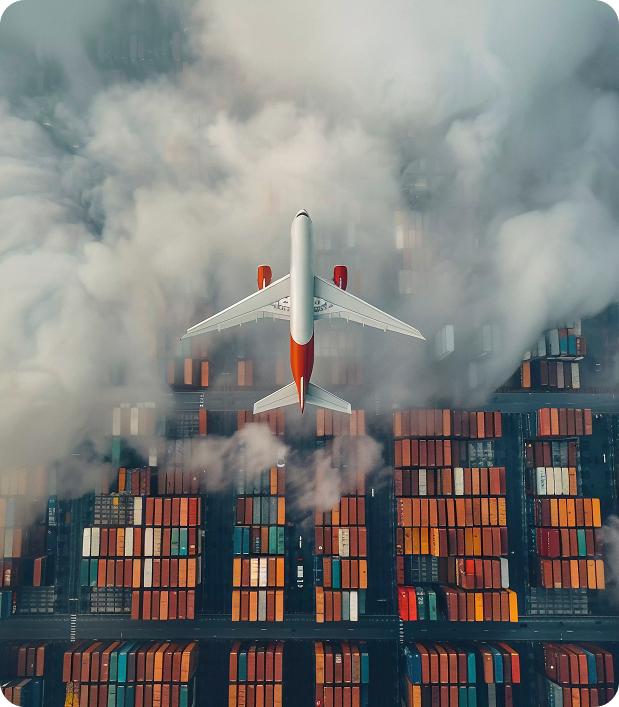

Shipping by Air vs. Shipping by Sea
A shipment may have various requirements regarding the mode of transport to be used, but essentially, it comes down to the nature of the freight, the time frame and how much budget.
| Factors | Shipping by AIR | Shipping by SEA |
|---|---|---|
| Distance | Air is most preferred for a direct city to city transport and on the most direct routes between countries. | Sea is preferred for shipments that need to travel great distances spanning the vast oceans. |
| Type of Cargo | Unless special aircraft chartered, there are limited dimension and weight for loading. | Apart from the traditional parcel or box freight, sea is also used to transport heavy equipment, cranes, project cargoes, etc. |
| Time Sensitivity | This mode is chosen mostly due to its quick transit time and their usually reliable scheduled arrival and departure times. Benefits may be lower inventory carrying costs and the opportunity to capture market share. | A transit time of a month from point to point is quite normal for a sea freight shipment. |
| Cost | Air cost higher mainly due to the capacity available on a plane, the higher fuel consumption and operational costs of a plane. | A cargo ship can carry much more at once. |
| Safety of Cargo | Airport regulations are controlled quite strictly and these regulations include the storage, handling and securing of your cargo. | If the cargo inside the container is not packed properly, or LCL, there is a risk of cargo getting damaged. |
| Accessibility | Ashandled quicker, there may not be congestion at the airports as compared to the long queues at the sea ports. Even had, it could be solved in days. | Periods of severe congestion in sea ports could happen, which brings with it its own problems of additional costs like demurrage and detention. |
You’d better seek a good balance between the service quality offered, cost component, the reliability of the service provider and time frame.
Also, it’s important to always keep an eye on both the air and ocean markets as both are extremely volatile. In many cases, depending on how market rates are moving and other market dynamics, one mode of transport can be chosen over the other.
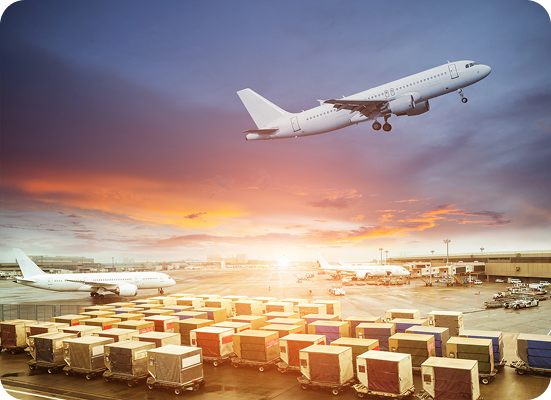
Shipping by Air vs. Shipping by Courier
Normal air freight is just to-airport delivery. You or the freight agent needs to handle the customs clearance and inland transportation to your warehouse, while courier services such as DHL/FedEx/UPS can be the one stop to-door delivery provider.
- Air freight = airport-to-airport
- Air courier = door-to-door
| Factors | Air Freight | Air Express/Courier |
|---|---|---|
| Service Scope | Airport to airport | Door to door |
| Service Content | Excluding import operations at the destination airport | Including customs clearance and delivery at the destination airport (excluding customs fees) |
| Loadable Weight | Starting from 45KG, some routes 100KG | Minimum 0.5KG |
| Billable Weight | 【Length (cm) × Width (cm) × Height (cm)】÷6000 | 【Length (cm) × Width (cm) × Height (cm)】÷5000 |
| Shipping Documents | Waybill, packing list, commercial invoice and maybe more | Commercial invoice |
| Customs Procedures | The consignor needs to declare customs and the consignee needs to clear customs | Usually no separate customs procedure is required |
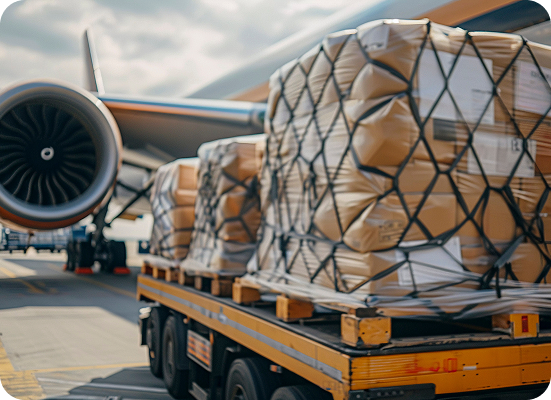
The cost for courier services is much higher than for other modes of transportation. This is because the courier carrier typically owns and operates the entire transportation network from aircraft and delivery vehicles to hubs (both ground and air) and the downstream transportation network to deliver the cargo to its final destination.
Air Freight Advantages
Airmail was one of the earliest business-related applications of air transport, as it helped speed up monetary transactions and linked distant businesses together, facilitating the emergence of continental and intercontinental businesses.
Air cargo provides the benefits of speed, reliability, security, and reduction of inventory cost.
Speed
Certain products are extremely time sensitive. These could include a wide range of perishables, medical products, and seasonal products that must meet very specific delivery deadlines and whose production offers limited options other than by air.
In general, the transit time from China to worldwide is no longer than 10 working days. Only 3~5 days in most cases. This is a vast reduction compared to ocean freight.
Direct, point-to-point air freight shipments typically will cost more than indirect routes. If the ship-time requirement is 2 days, you’ll likely be limited to 2–3 direct carriers. But if that ship-time requirement expands to 4–5 days, you might have 5–10 carriers in play using indirect routing.
Security
Certain products such as electronics, precision instruments, sophisticated industrial machinery and other high-value commodities, require more security from loss, damage or theft than lower-value goods. Aircraft generally offer not only the fastest but also the most secure way to move cargo from point to point.
Capital Cost
The air cargo industry is being dramatically impacted by the rise of e-commerce. This evolving trend has put pressure on sales channels for faster delivery and optimum supply chain services.
High-value commodities consume large amounts of capital and impose high interest costs. Besides, air cargo operations can offer a shipper the benefit of constant resupply, inventory levels can be reduced. A business can free up more capital, reduce inventory holding costs, and reduce obsolescence cost.
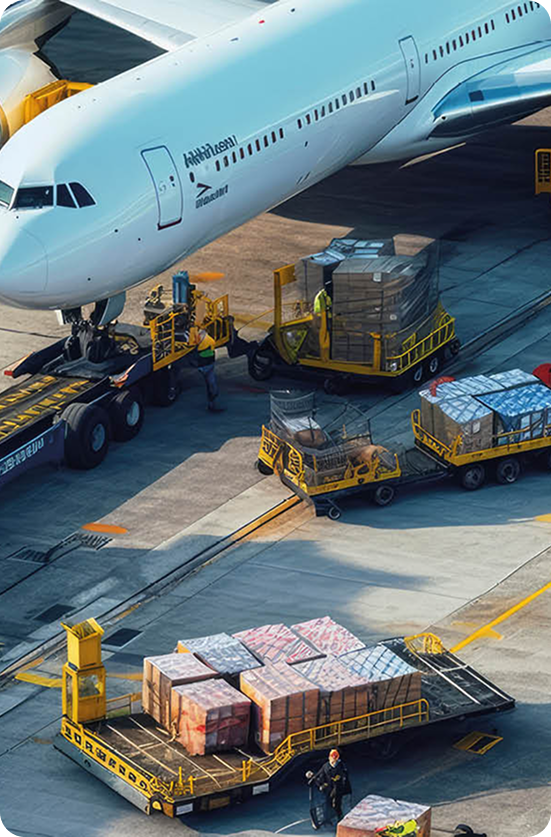
For many supply chains, time may be a secondary factor as long as the goods arrive at the distribution center within the expected time frame. If shipments are regular and this reliability remains consistent, the supply chain can be organized accordingly by increasing in-transit inventory.
Air Cargo Types
By cargo properties, they can be divided into:
- General cargo
- Special cargo
General cargo
Air cargo represents rough 35% of global trade by value, but less than 1% by volume.
Such as electronics, Jewelry, pharmaceuticals, wristwatches are high value. The electronics industry accounts for around 40% of the value of the entire international air cargo industry.
They need to be transported in a very good condition. The air shipping cost more than sea shipping, but means nothing compared to the value amount of products.
Special cargo
Including living animals, goods that are dangerous or need temperature control. For example, some chemicals are dangerous goods, and seafood that requires refrigeration and freezing during the whole-course cold chain transportation.
Perishable or hazardous goods are subject to different regulations, compared to general cargo. They have to pass through various inspections and need to meet numerous requirements, and not every airline can accept these items.
Make sure that you advise in detail about special goods you want to ship. Because leaving out any detail might lead to penalties/extra fees and denial of shipment.
Most of the special cargo can be classified as general after tested by the authority. And there should be a report – Identification and Classification Report for Air Transport of Goods shown to the carrier before loading.
- Powder
- Chemical
- With oil or liquid
- With battery
- With magnet (needs magnet test)
- Audio accessory and equipment
- With motor inside
Other restrictions will apply due to national laws and regulations of specific airlines.
Please note that most of the airlines are saying NO to the following names or descriptions of the commodity: Lithium Battery Toys, Scooter, Hoverboard, Power Supply, Power Bank, Air Bag, Electric Board, Electronic Board.
Air Service Types
Normal air freight is just to-airport delivery. You or the freight agent needs to handle the customs clearance and inland transportation to your warehouse, while courier services such as DHL/FedEx/UPS can be the one stop to-door delivery provider.
- Air freight = airport-to-airport
- Air courier = door-to-door
| Air Service | Description | Transit Time |
|---|---|---|
| Express | Designed for urgent shipments, this service ensures next-day delivery with daily direct flights. Get your cargo to its destination in record time. | 1-2 days |
| Standard | A balanced choice for routine cargo, offering an optimal blend of affordability and speed. | 3-5 days |
| Economy | Most cost-effective service, ideal for not so urgent shipments. Expect delivery within a reasonable timeframe without compromising on service quality. | 5-8 days |
| Charter | A fully flexible and dedicated service, allowing you to charter entire flights for your cargo. Ideal for large volume shipments, special requirements, or when regular schedules don’t fit your timeline. |
The more flexible you can be with transit time requirements, the more you’ll save. Shifting from standard air to deferred air opens up huge cost-saving possibilities.
Longer transit times also broaden the number of carriers and routing possibilities that can be considered. More competitors and more routing options typically yield a much better rate.
It is increasingly being considered as it strongly affects inventory holding costs and inventory cycle times in supply chain management. Therefore, for higher value or perishable shipments, the fastest and/or shortest route option will be preferred.
Air Freight Cost
Air cost means airport-to-airport rate x total weight.
Air Rate Class
The MOQ is 45 kgs.
The rate class is 45kg+, 100kg+, 300kg+, 500kg+, 1000kg+.
The air rate for each range is different. The lower the billing weight, the higher the unit price, and the air freight rate for 45KG+ is the highest. Conversely, the heavier the goods, the lower the unit price.
Here’s an example.
| Weight Class | Weight Range | Air Rate (Per KG) |
|---|---|---|
| 45KG+ | 46-100KG | $10 |
| 100KG+ | 101-300KG | $8 |
| 300KG+ | 301-500KG | $7 |
| 500KG+ | 501-1000KG | $6 |
| 1000KG+ | More than 1000KG | $4 |
Dimensional Weight
Dimensional weight, is also known as Chargeable Weight or Billable Weight. Carrier charge for freight based on the dimensional weight or actual gross weight whichever is higher.
Air cargo rate is calculated by chargeable weight, measurement unit is kilogram. The measurement unit of valuable cargo is 0.1 kg. Chargeable weight is the heavier one between gross weight and dimensional weight.
| Volume Unit | Dimensional Weight | |
|---|---|---|
| By air freight | cm³ | Volume/6000 |
| By express courier | cm³ | Volume/5000 |
* If the weight is less than 21 kg, then the minimum chargeable unit is 0.5 kg; If more than 21 kg, then 1 kg.
* To calculate air goods volume L x W x H in inches divided by 366 = weight in kilograms
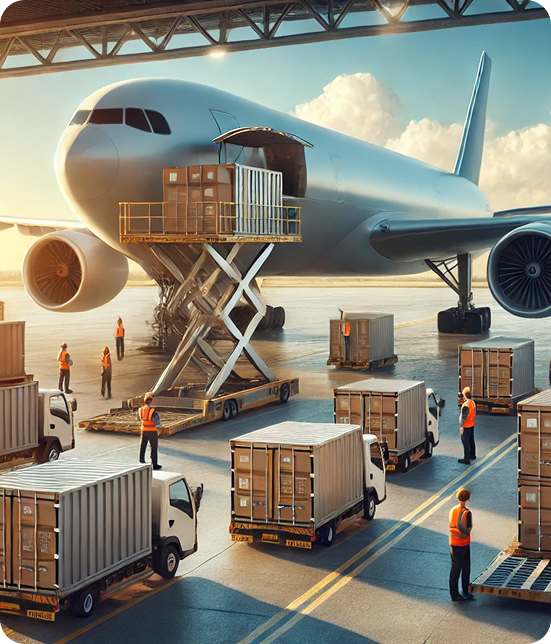
The two options for air cargo transport are dedicated freighters and belly capacity in passenger aircraft.
- The passenger aircraft has designed to transport both cargo and passengers. It has less cargo space with limited commodities.
- The freight aircraft has designed exclusively for cargo with no passenger amenities. It has wide body, cargo doors, high wings and high tails.
The ideal specifications should be within these dimensions as below:
For wide-body aircraft,
- Length – 125in (315cm)
- Width – 96in (240cm)
- Height – 63in (160cm)
For narrow-body aircraft,
- Length – 48in (120cm)
- Width – 40in (100cm)
- Height – 31in (80cm)
The era of the wide-bodied jets started in 1970 when the first Boeing 747 entered service. This was the first time in history that the aviation industry chose size over speed to increase performance. The larger wide-body aircraft represented an increase the volumes carried by narrow body aircraft by a factor of almost 3.
Items higher and/or longer than this may be accepted but we need to quote for this type of shipment on a case by case basis. To keep costs down, we suggest trying to keep your shipment within these size guidelines.
Consider the full cost of getting the product to the end consumer, i.e. transportation, warehousing and transshipment. The concept of cost is relative as its significance relates to the value of the goods being carried. Cost considerations tend to focus more on low-value containerized cargo, such as commodities (e.g., paper), rather than high-value cargo (e.g., electronics).
Air Waybill
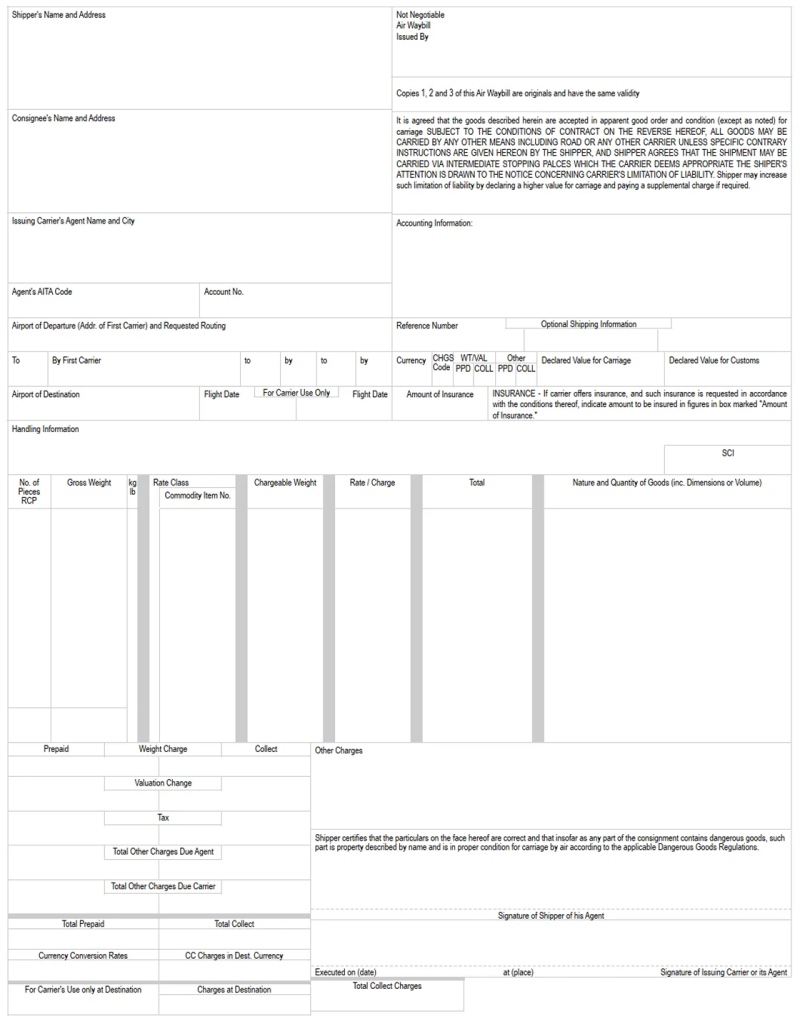
Air Waybill, is a non-negotiable transport document issued by the carrier (Master AWB) or the agent (House AWB), which indicating that the carrier has accepted the goods listed therein and obligates itself to carry the consignment to the airport of destination according to specified conditions.
* If the weight is less than 21 kg, then the minimum chargeable unit is 0.5 kg; If more than 21 kg, then 1 kg.
* To calculate air goods volume L x W x H in inches divided by 366 = weight in kilograms
The two options for air cargo transport are dedicated freighters and belly capacity in passenger aircraft.
- The passenger aircraft has designed to transport both cargo and passengers. It has less cargo space with limited commodities.
- The freight aircraft has designed exclusively for cargo with no passenger amenities. It has wide body, cargo doors, high wings and high tails.
The ideal specifications should be within these dimensions as below:
For wide-body aircraft,
- Length – 125in (315cm)
- Width – 96in (240cm)
- Height – 63in (160cm)
For narrow-body aircraft,
- Length – 48in (120cm)
- Width – 40in (100cm)
- Height – 31in (80cm)
The era of the wide-bodied jets started in 1970 when the first Boeing 747 entered service. This was the first time in history that the aviation industry chose size over speed to increase performance. The larger wide-body aircraft represented an increase the volumes carried by narrow body aircraft by a factor of almost 3.
Items higher and/or longer than this may be accepted but we need to quote for this type of shipment on a case by case basis. To keep costs down, we suggest trying to keep your shipment within these size guidelines.
If you have read our guide about Bill of Lading, you can also understand the AWB. AWB is almost the same structure as Ocean Bill of Lading (OBL).
An Air Waybill is a documentary proof of the contract of carriage between the shipper and the carrier.
It also serves as:
- a delivery receipt
- a receipt of goods for shipment
- a document required for Customs clearance
- a form of invoice for the carriage of the goods
- an insurance certificate (if the insurance cover was arranged through the airline)
- a dispatch note, bearing a list of all accompanying documents, and any special instructions given by the shipper
Difference between AWB and OBL
The rule of AWB played in an international shipping is almost the same as OBL, but AWB doesn’t serve as a document of title. This is the most significant difference.
The words non-negotiable are printed at the top of the Air Waybill, and must not be changed or removed.
The AWB will be delivered with the air cargo. So as soon as the plane departs from the loading airport, the cargo rights will be transferred to the consignee. The consignee can only show their identification to claim the shipments. The AWB cannot be transferred. That’s why you have to pay freight costs before departure from China.
Since the incorporation of the E-AWB (electronic air way bill) there is no longer a need to print, handle or archive the paper, largely simplifying the air cargo process.
“Rate Charge”
There’s a column called “Rate Charge” in the middle of an AWB. This rate will be automatically generated by the airlines according to IATA, and can NOT be modified. The charge shown is higher than you really paid.
This is the all-in billable weight rate, calculated by:
- GCR (General Cargo Rate)
- SCR (Specific Commodity Rate)
- CCR (Commodity Classification Rate or Class Rate)
- BUC (Bulk Unitization Charge)
Air cargo tracking
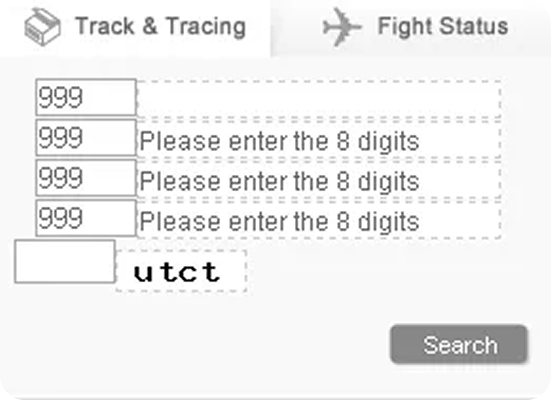
Each AWB has its unique number. You can find this number on the head section. By submitting the number on the tracking page of the airline’s official website, all updated tracking information will be available.
The bill format is 2 airline code + 3 numbers as prefix + several numbers. Example, Air China Cargo, CA as the airline code, 999 as prefix.
Some carriers will provide a free service called email alert. When the goods moved, the updated status will be sent to you shortly. Take advantage of that.
Top Airports in China and Worldwide
The airport code, is designated with a code (three letters) by the IATA. Nearly every aspect of international flight operations, including airline name, currency, aircraft type, cargo standards, Hazmat regulations, and regional delineations, is standardized with an IATA code.
Airport codes are identifiers that make international and domestic trade and transport work. These codes hold the key to efficiently navigating the complex web of global logistics. It is mandatory on many key freight documents, to specify the main transit’s airport of origin and airport of destination by their codes.
In fact, every airport, seaport, and inland transfer port has its unique code. These codes are nearly universally used by air cargo carriers and freight forwarders.

| Airport Code | Airport Name | Airport City |
|---|---|---|
| PEK | Beijing Capital International Airport | Beijing |
| PVG | Shanghai Pudong International Airport | Shanghai |
| CAN | Guangzhou Baiyun International Airport | Guangzhou, Guangdong |
| XMN | Xiamen Gaoqi International Airport | Xiamen, Fujian |
| HGH | Hangzhou Xiaoshan International Airport | Hangzhou, Zhejiang |
| CKG | Chongqing Jiangbei International Airport | Chongqing |
| CTU | Chengdu Shuangliu International Airport | Chengdu, Sichuan |
| KMG | Kunming Changshui International Airport | Kunming, Yunnan |
| CSX | Changsha Huanghua International Airport | Changsha, Hunan |
| XIY | Xi’an Xianyang International Airport | Xi’an, Shanxi |
| NKG | Nanjing Lukou International Airport | Nanjing, Jiangsu |
| SZX | Shenzhen Bao’an International Airport | Shenzhen |
| WUH | Wuhan Tianhe International Airport | Wuhan, Hubei |
| SHE | Shenyang Taoxian International Airport | Shenyang, Liaoning |
| TSN | Tianjin Binhai International Airport | Tianjin |
| KW | Guilin Liangjiang International Airport | Guilin, Guangxi |
| NGB | Ningbo Lishe International Airport | Ningbo, Zhejiang |
| HRB | Harbin Taiping International Airport | Harbin, Heilongjiang |
| FOC | Fuzhou Changle International Airport | Fuzhou, Fujian |
| SHA | Shanghai Hongqiao International Airport | Shanghai |
| URC | Ürümqi Diwopu International Airport | Ürümqi, Xinjiang |
| DLC | Dalian Zhoushuizi International Airport | Dalian, Liaoning |
| NNG | Nanning Wuxu International Airport | Nanning, Guangxi |
| SYX | Sanya Phoenix International Airport | Sanya, Hainan |
| CGO | Zhengzhou Xinzheng International Airport | Zhengzhou, Hunan |
| HAK | Haikou Meilan International Airport | Haikou, Hainan |
| KWE | Guiyang Longdongbao International Airport | Guiyang, Guizhou |
| TNA | Jinan Yaoqiang International Airport | Jinan, Shandong |
| TYN | Taiyuan Wusu International Airport | Taiyuan, Shanxi |
| HET | Hohhot Baita International Airport | Hohhot, Neimenggu |
China has invested trillions of dollars to develop its transportation infrastructure. In fact, some of its busiest airports are practically brand new. Jiaodong International Airport (TAO) in Qingdao (between Beijing and Shanghai) and Chengdu Tianfu International Airport (TFU) in Western China both opened in 2021. Beijing Daxing Airport (PKX), launched in 2019.
Ezhou Huahu International Airport – EHU is the fourth professional freight hub in the world and the first in Asia. The 1.5-hour flight circle of the airport can reach national-level urban agglomerations such as the Beijing-Tianjin-Hebei region, the Yangtze River Delta, and the Guangdong-Hong Kong-Macao Greater Bay Area, covering 90% of the country’s total economic output and 80% of the population.
Not all airports in China have international flights. Often, it depends on the origin city. A freight agent as RVL that understands the China market can help determine airport options and which offer the best costs: airport-to-airport and airport-to-door.
Based on the latest data from ACI World, top 20 cargo airports are:
- Hong Kong International Airport – HKG
- Memphis International Airport – MEM
- Shanghai Pudong International Airport – PVG
- Ted Stevens Anchorage International Airport – ANC
- Incheon International Airport – ICN
- Louisville International Airport – SDF
- Miami International Airport – MIA
- Hamad International Airport – DOH
- Los Angeles International Airport – LAX
- Taiwan Taoyuan International Airport – TPE
- Guangzhou Baiyun International Airport – CAN
- Narita International Airport – NRT
- Chicago O’Hare International Airport – ORD
- Cincinnati/Northern Kentucky International Airport – CVG
- Paris Charles de Gaulle Airport – CDG
- Frankfurt Airport – FRA
- Dubai International Airport – DXB
- Singapore Changi Airport – SIN
- Istanbul Airport – IST
- Shenzhen Bao’an International Airport – SZX
Top Cargo Airlines in China and Worldwide
Top 3 cargo airlines in China include:
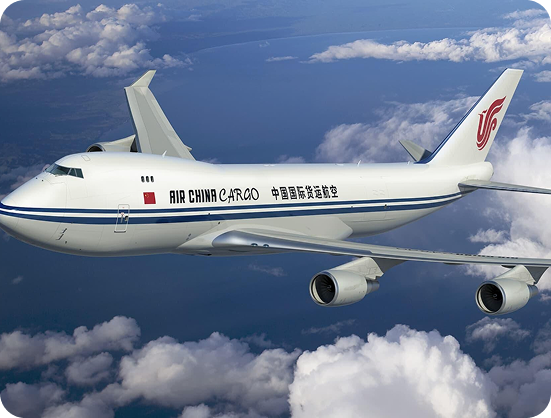
- Air China Cargo
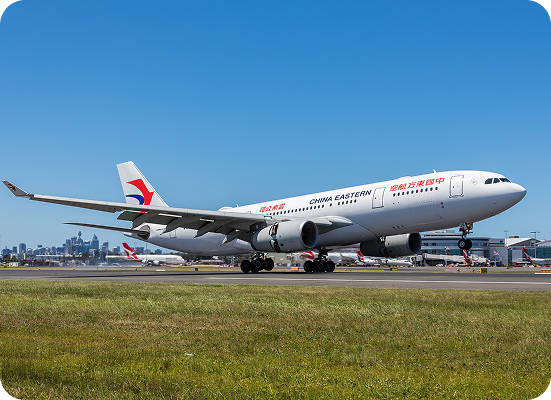
- China Eastern Air Logistics
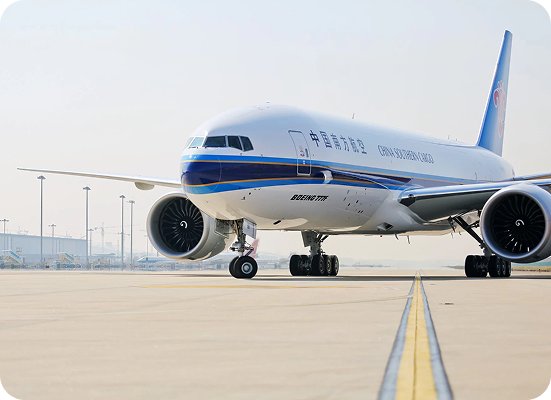
- China Southern Air Logistics
Air China Cargo
With Beijing Capital International Airport as the main operating base for passenger aircraft belly cargo, and Shanghai Pudong and Chengdu Shuangliu as the main operating bases for cargo aircraft, Air China Cargo operates 20 all-cargo aircrafts (including 3 x B747-400F, 12 x B777F, 5 x A330F) and 24 cargo routes, including 5 domestic routes, 18 international routes, and 1 regional route, serving 8 countries and 21 cities. The self-operated cargo terminal at the airport covers an area of over 200,000 square meters.
China Eastern Air Logistics
With operating bases at Shanghai Hongqiao and Pudong airports, China Eastern Air Logistics operates 15 x B777F all-cargo aircrafts, which can reach 1,000 destinations in 160 countries and regions around the world. It has 6 near-apron cargo terminals, 1 cargo transfer station and customs-supervised warehouses, with a total area of 1.25 million square meters, of which the Pudong Airport bonded warehouse area exceeds 500,000 square meters.
China Southern Air Logistics
It operates 19 x B777F all-cargo aircrafts, the largest number in China. Its route network covers China intensively, radiates Asia comprehensively, and effectively reaches Europe, America, Australia, the Middle East, Africa and other regions. It has 16 self-operated cargo terminals in 13 domestic cities including Guangzhou, Shenzhen, Beijing, and Urumqi. The total construction area of the cargo terminal warehouse area exceeds 300,000 square meters, and the handling capacity exceeds 2.3 million tons/year. The Urumqi hub radiates Central Asia, and has outstanding advantages in land-air transport.
Top 10 cargo airlines worldwide include:
- FedEx
- UPS
- Qatar Airways Cargo
- Emirates SkyCargo
- DHL
- Cargolux
- China Southern Cargo
- Korean Air Cargo
- Atlas Air
- Singapore Airlines Cargo
Among the world’s largest cargo airlines, two specialist airlines dominate the market: UPS and FedEx. Their fleet is entirely dedicated to cargo operations and provides cargo consolidation capabilities through dedicated hubs. Asian cargo airlines also play an important role (Air China), benefiting from the growth of high-tech exports from Asian economies to European and North American markets.
Air freight activity is usually related to airports servicing important consumption markets, manufacturers of high-value goods, or distribution hubs. Global air freight activity is clustered around East Asia, North America, and Western Europe. Other clusters are around the Middle East and Southeast Asia.
Main Air Shipping Routes
1. Southeast Asia, Australia, and New Zealand
BR, CA, CZ, FM, GA, KE, MH, SQ, MU, BI, NX, NZ, PR, QF, TG, UO, 5X, ZH, AI, VN, 9W
| Airline | Direct | Destinations |
|---|---|---|
| MH | KUL | PEN CMB DAC DEL HYD SYD MLE BEY DXB JED JNB |
| SQ | KUL SIN | SYD MEL AKL BNE |
| VN | SGN/HAN | DAD RGN PNH |
| QF | SYD/MEL/DRW |
2. South Asia, Middle East and Africa
EK, EY, ZP, MU, SU, PR, CA, UW, CX, QR, MH, CZ, SV, TG, TK, BI, SQ, AI, GA, BA, HU, 9W, W5, ZH, ET
| Airline | Direct | Destinations |
|---|---|---|
| EY | MAA/AUH/DEL/BOM | AMM BAH BEY DMM DOH DXB KWI JED IKA SHJ LCA LOS ACC ADD JNB CAI |
| EK | DXB | AUH SHJ DWC IST IZM ADA ANK DAR EBB KRT NBO CAI BOM DEL CMB MLE DAC ISB |
| SV | RUH | LOS JNB KRT ADD TUN ALG DKR |
3. Europe
CZ, MU, CA, BA, KL(MP), UPS, RU, Y8, GD, EK, SV, CX, EY, KE, OZ, JL, TK, AY, SU, LX, TG, ZP, QR, BI, HU, MH, ZH, 6U
| Airline | Direct | Destinations |
|---|---|---|
| UPS | CGN | AMS BER BOD BRE BRU CDG DTM DUS FRA FMO HAJ HAM HHN LUX MUC SNN CPH ZRH |
| SU | SVO/HHN | ATH BUD LCA WAW PRG AMS BER BRE BRU BSL CGN DTM DUS FMO FRA HAJ HAM BCN CPH LON MIL NCE ROM VCE VIE |
| CA | CPH/VIE/MXP/FRA | AMS ANR ATH BCN BRE BRU BSL BIO CGN HAM LUX MAD NUE ROM RTM |
4. America
MU, F4, BR, QF, Y8, UPS, PO, SQ, CX, KE, OZ, JL, UA, AA, CO, AC, AM, HU, BA, LX, EK, PR, CZ
| Airline | Direct | Destinations |
|---|---|---|
| AA | ORD/LAX | JFK DFW MIA YYZ YUL ATL CLT PHX BNA CVG CLE DTW IND MCI MKE SDF MSP STL SFO SEA SDQ STI |
| AM | LAX/MEX | GDL GUA SCL MTY SCL SJO LIM BOG EZE |
| CO | EWR | YYZ MEX MTY GDL GIG GRU EZE |
| PO | LAX/CVG | AUS DEN DFW IAH MIA SEA SFO SLC YVR ABE ABQ ALB ATL BOS CLT DFW MCI LAS JFK JAX EWR |
| UPS | ANC | ORD JFK EWR GDL MEX MTY SAP SJO SJU TGU CCS EZE |
Low-risk routes are clearly better than high-risk routes. Relates to generally imponderable factors involving the level of confidence that the shipment will reach its final destination within expected cost, time and reliability considerations. In some cases, the risk may also involve potential damage or theft of the goods.
What RVL Can Do for YOU?
As the prospect of global markets becomes more and more of a reality, the demand for air cargo movements will continue to grow as part of an expanding logistics system that will emphasize higher processing speeds, greater efficiency, more specialized customer services, time-definite delivery, and reduced costs.
What we are trying to do is deliver your shipments as early as possible, and make the process smoothly with a competitive air shipment quote. Whether airport to airport, or airport to door, you can rely on us.
- Cargo insurance
- Door to Door service
- Fumigation and inspection
- Direct flight to worldwide
- Single-source quoting
- Competitive air freight rates
- Customs clearance service at origin or destination
RVL covers all major airports in China with cheap prices. Depends on where’s your shipment located, and the available schedules to your destination, we’ll choose the best suitable one for you as your loading airport. We rely on qualified partner carriers that are committed to providing safe, efficient and on-time service to importers across the world.
Low cost, time definite services, and proof of delivery, that’s we are doing and we are good at it. We are always interested in new opportunities and supporting your business.
RVL improves profitability for customers by allowing them to focus on their core competencies while we manage their logistics, providing great air freight solutions.
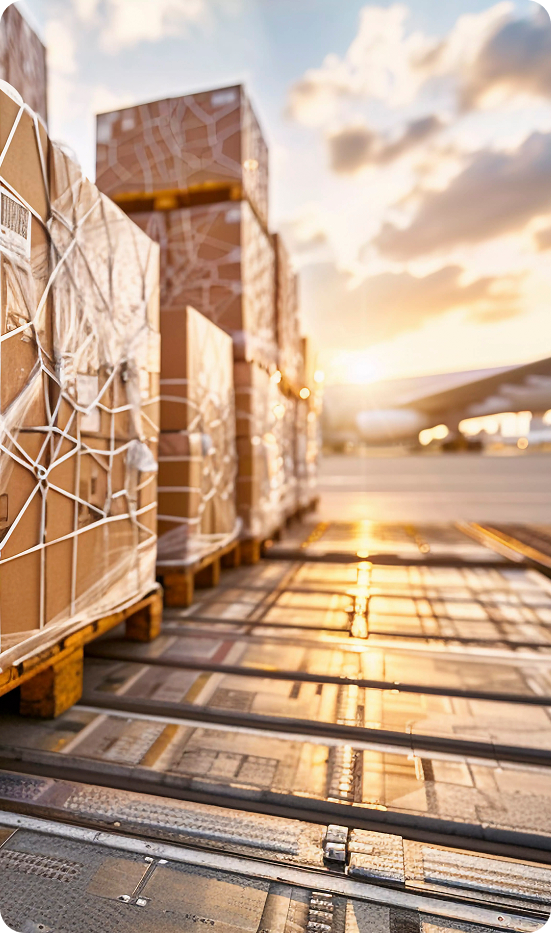
Air Shipping Process with RVL
We suggest you buy FOB, and let your supplier handle the inland trucking to the airport. If the incoterm is EXW, we can also pick up for you.
Quote → Book → Pay, job done from your side. Let us do all the rest heavy job without disturbing you.
- You fill and submit our quote form with your shipping details. (Quote)
- You can expect the response within 12 hours.
- We discuss more, and come to an agreement.
- You simply provide the supplier contact details.
- We contact your supplier and recheck everything needed, then book the space from the carrier.
- We or your supplier arrange inland delivery to the airport.
- We confirm the chargeable weight.
- You pay the shipping cost as we agreed. (Pay)
- We arrange customs declaration and forwarding the goods.
We’ll keep tracking your shipment and keep you updated till received.
As a valued partner we want to deliver more than just savings, we deliver peace-of-mind.
If you choose delivery by air, we’ll understand that you can’t afford customs issues or any hang-ups, and you certainly don’t have time to deal with them. You can just leave the rest to us, once we come to an agreement about the freight charges and the ETA.
RVL help customers gain more control over their supply chain, become more cost effective and increase transportation management efficiency. Thank you to all our customers for allowing us to be your one-stop logistics provider and helping deliver peace of mind.
Get a free quote now for air freight from China to USA, UK, Australia, Canada and all over the world. We are always ready for your time-critical supply chain management.